
GETTING IT RIGHT
Models For Seattle
What does responsible growth actually look like? The world's most successful cities pair housing growth with investments in parks, tree canopy, public space, mobility, and climate resilience.
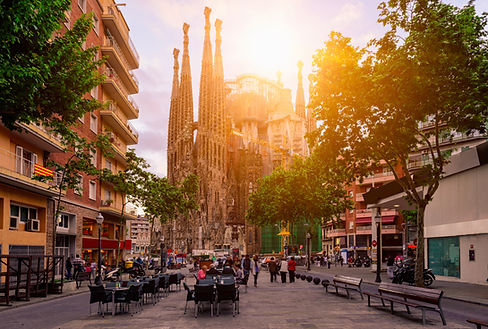
Barcelona, Spain
Making Density More Livable
Barcelona has become one of the world's leading examples of how dense urban growth can improve quality of life when paired with investments in public space. Through its internationally recognized "Superblocks" program, the city reclaimed streets from vehicle traffic and transformed them into pedestrian-oriented public spaces with greenery, recreation areas, and gathering places. The Urban Institute notes that the initiative was designed not only to reduce emissions and improve mobility, but also to expand equitable access to green space and neighborhood amenities. Barcelona's approach demonstrates that density succeeds when public space is treated as essential infrastructure rather than an afterthought. Seattle can learn from this model by ensuring that housing growth is accompanied by investments in parks, public spaces, walkability, and neighborhood livability.
Portland, Oregon
Growing Housing and Urban Forests Together
Portland offers a model for adding housing while keeping neighborhoods green and livable. Through its Residential Infill Project, Portland legalized more middle housing, limited building scale, and created incentives for smaller affordable homes. This approach was designed to increase density without encouraging oversized redevelopment. Portland manages its entire urban forestry through a single department within Portland Parks & Recreation. This unified approach treats the city’s urban forest as one interconnected resource and uses outcome-based metrics to measure progress. Portland’s tree regulations also require developers to preserve existing trees, provide space for new trees, or pay mitigation fees. The Portland Clean Energy Community Benefits Fund also supports tree planting and long-term care in underserved and heat-vulnerable communities. Portland demonstrates that cities do not have to choose between housing, affordability, and a healthy urban forest. Seattle can follow this model by pairing development standards that promote housing growth with a coordinated strategy to preserve trees, expand canopy, and invest in climate resilience.


Copenhagen, Denmark
Planning for Climate and Community
Copenhagen has become a global model for climate-smart urban development by integrating housing, transportation, parks, and climate resilience into a unified planning strategy. The city has invested heavily in bicycle infrastructure, public transit, waterfront access, and neighborhood parks while continuing to accommodate growth. Copenhagen's planning philosophy recognizes that successful density depends on access to public amenities and green space, not simply additional housing units. Municipal policy has long prioritized ensuring residents can reach parks and open spaces easily, reflecting the belief that public space is essential to urban health and livability. Copenhagen demonstrates how cities can grow while strengthening climate resilience, mobility, and quality of life simultaneously.
Bogotá, Colombia
Public Space as Essential Infrastructure
Bogotá has earned international recognition for using parks, green space, and public infrastructure to improve equity and quality of life across a rapidly growing city. Investments in parks, bicycle networks, public transit, and community spaces have helped expand access to opportunity while improving public health and mobility. The city's extensive public realm including Simón Bolívar Metropolitan Park and its connected network of public spaces reflects a planning philosophy that treats public space as critical infrastructure rather than a luxury. Bogotá's experience shows that equitable growth requires investments not only in housing, but also in the parks, transportation systems, and community spaces that support thriving neighborhoods.
